
Edward Alburger, August 5th, 1869
On Wednesday, August 4, 1869, at about two minutes before seven o’clock, in the evening, a great explosion occurred at a warehouse on Front Street. This six-story building, measuring 300’ by 150’, took up the entire block from Front to Second Streets and from Lombard to Pine. A portion of the cornice was knocked off by the explosion and fell to the street. About five minutes later a second explosion occurred, which witnesses stated, lifted the entire building off the ground. This opened vast cracks in the walls allowing the flames to shoot out of them. Bystanders said they could see the flaming barrels inside. As the barrels of whiskey broke open their contents caught fire and flowed into the street. A great quantity of this fluid flowed into the sewers. The flaming liquid collected in the culvert at Front and Pine Streets. The intense heat caused the culvert to collapse, opening a massive hole in the street which was spewing blue flames.
At 9:20 pm Mayor Fox arrived and ordered all the reserve apparatus, being kept at the firehouses, to be summoned to the fire. At 9:24 Chief Engineer Downey ordered a general alarm which would bring every fire company in the city to the scene. Before the general alarm was sounded, several fire companies from Camden NJ, seeing the flames from across the river, came to help. Shortly after 1:00 a.m. a strong thunderstorm blew in. This helped slow the fire but at 2 a.m. the fire was stilled burning out of control, but the heavy rains were damping the flames.
This building was built to be fireproof. The walls were 18 inches thick and went from the cellar to above the roof. There were 9 separate stores (warehouses) in this building. Heavy metal doors closed the openings between the stores. It had heavy metal shutters which were closed every night. The building may have been fireproof but the 40,000 barrels of whiskey, most of which were owned by the government were not.
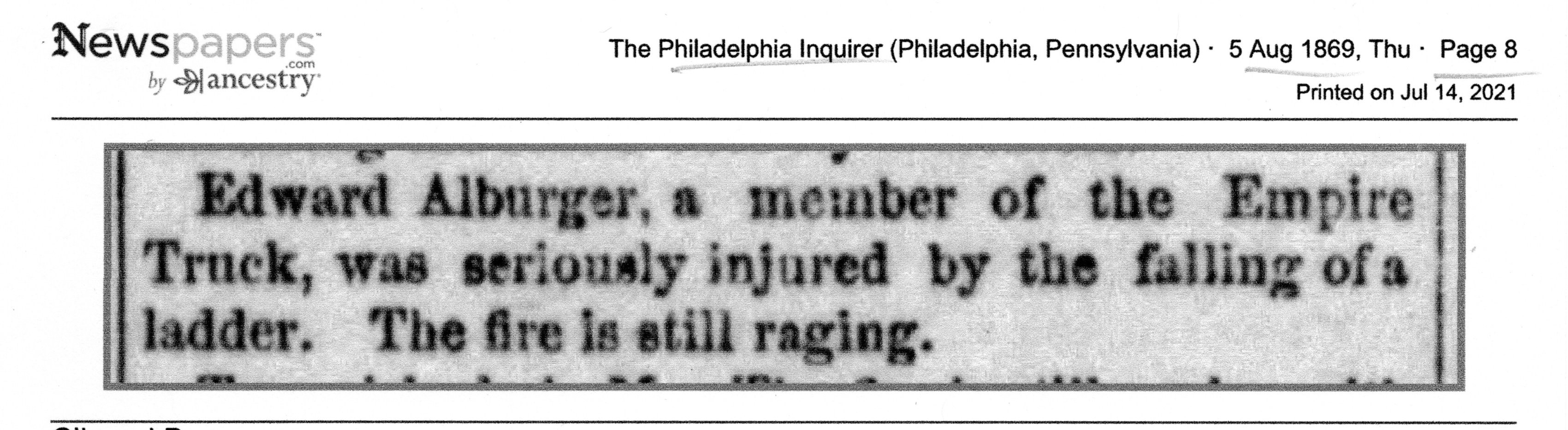
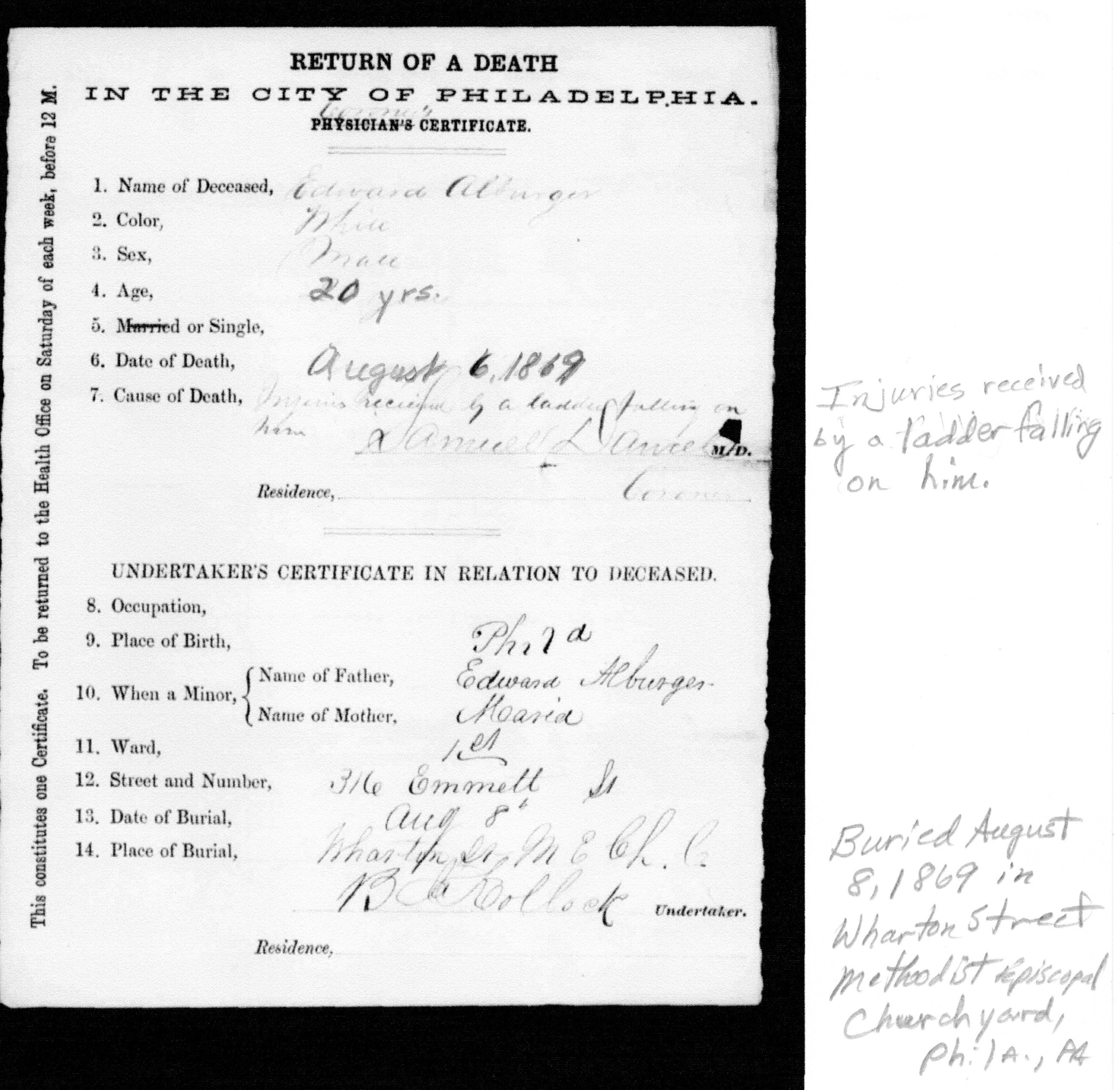
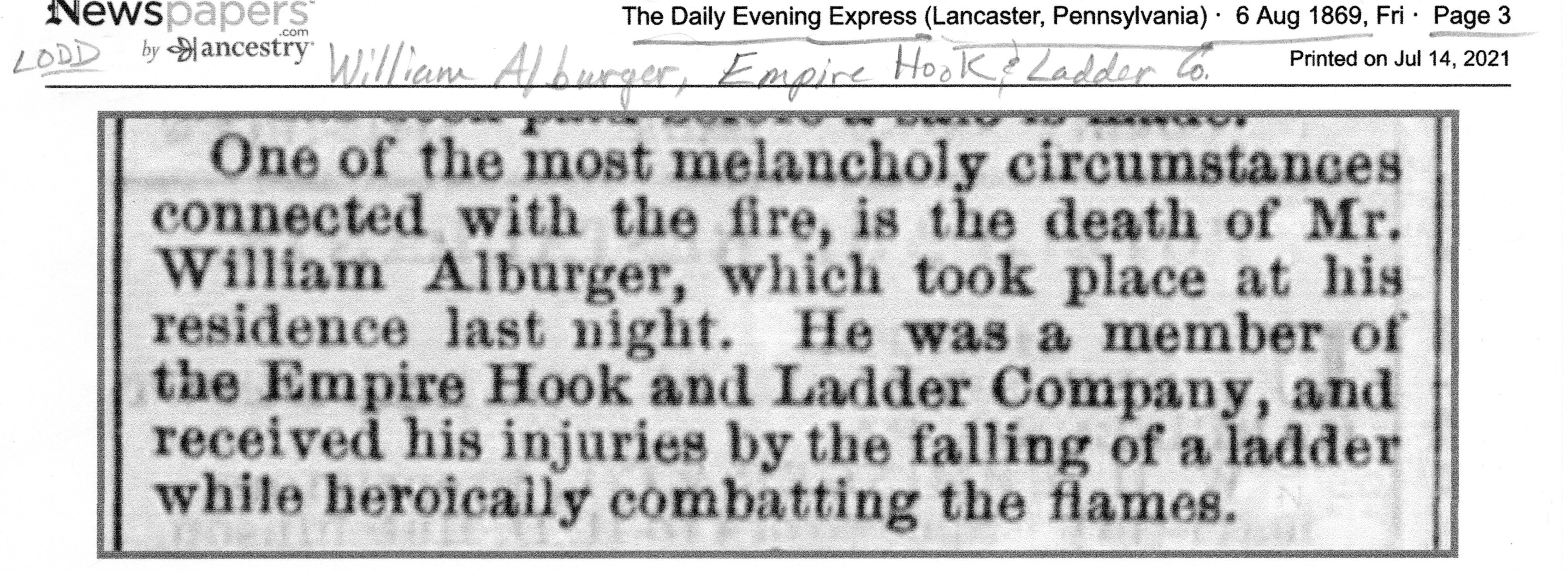
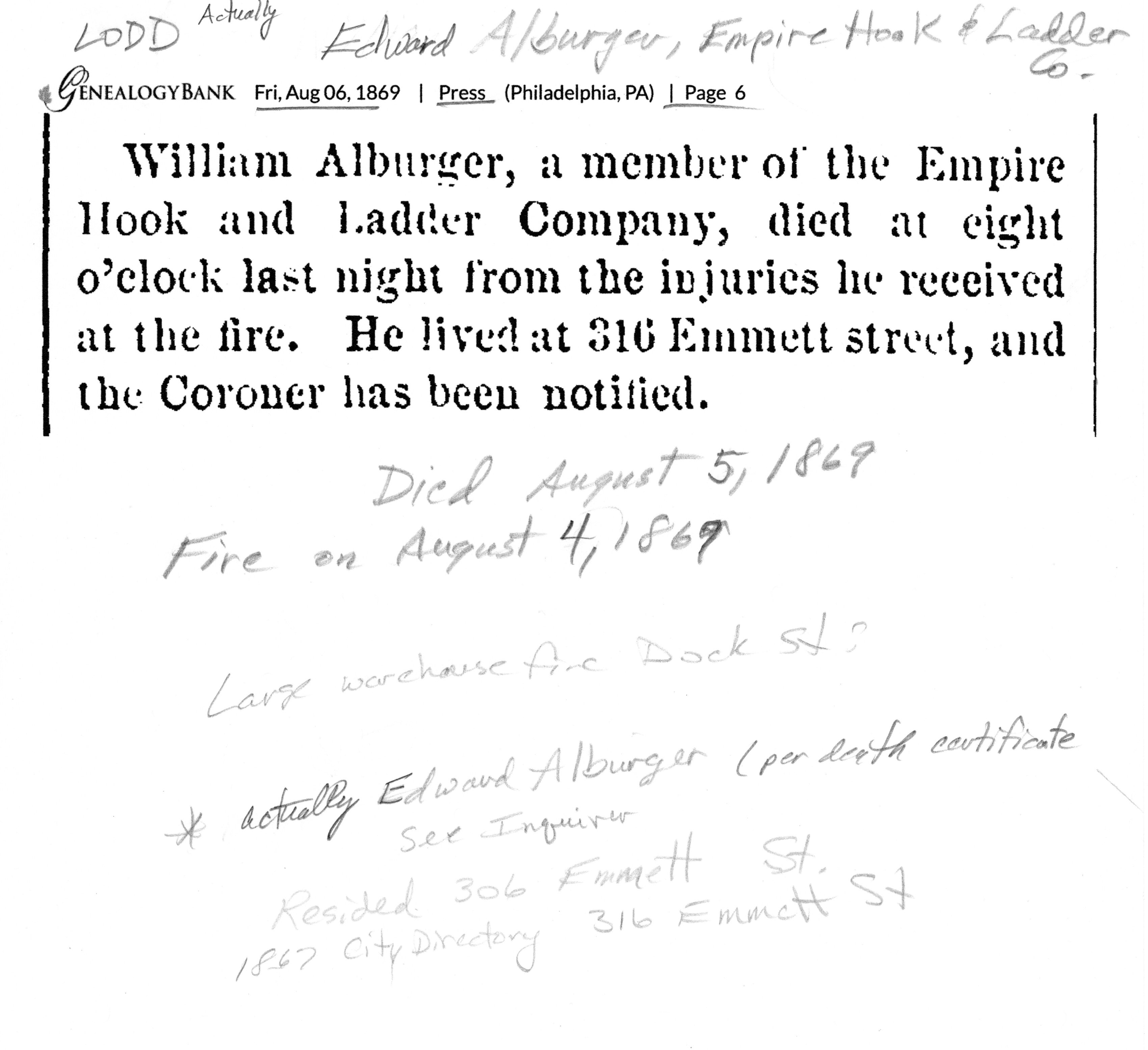
At about 1:00 a.m. on August 5, the wall on the FrontStreet side collapsed. A ladder fell striking 20-year-old Edward Alburger, of the Empire Hook & Ladder Co., in the head. He was taken to his home where he died that night. He was laid to rest in the Wharton Street Methodist Episcopal Churchyard.
The cause of the explosion and fire was determined to be the extreme weight of the great number of barrels caused the building to settle. The shifting caused some of the barrels to fall and split open. The fluid flowed down until it reached the boiler room where it found the flames of the boiler. With the shutters closed, as they were every night, the fumes were contained in the building. The fire shot up the stream of whiskey igniting the fumes. The ball of fire had nowhere to go so it tried to escape, lifting the building and causing more barrels to split open
Edward Alburger, August 5th, 1869
On Wednesday, August 4, 1869, at about two minutes before seven o’clock, in the evening, a great explosion occurred at a warehouse on Front Street. This six-story building, measuring 300’ by 150’, took up the entire block from Front to Second Streets and from Lombard to Pine. A portion of the cornice was knocked off by the explosion and fell to the street. About five minutes later a second explosion occurred, which witnesses stated, lifted the entire building off the ground. This opened vast cracks in the walls allowing the flames to shoot out of them. Bystanders said they could see the flaming barrels inside. As the barrels of whiskey broke open their contents caught fire and flowed into the street. A great quantity of this fluid flowed into the sewers. The flaming liquid collected in the culvert at Front and Pine Streets. The intense heat caused the culvert to collapse, opening a massive hole in the street which was spewing blue flames.
At 9:20 pm Mayor Fox arrived and ordered all the reserve apparatus, being kept at the firehouses, to be summoned to the fire. At 9:24 Chief Engineer Downey ordered a general alarm which would bring every fire company in the city to the scene. Before the general alarm was sounded, several fire companies from Camden NJ, seeing the flames from across the river, came to help. Shortly after 1:00 a.m. a strong thunderstorm blew in. This helped slow the fire but at 2 a.m. the fire was stilled burning out of control, but the heavy rains were damping the flames.
This building was built to be fireproof. The walls were 18 inches thick and went from the cellar to above the roof. There were 9 separate stores (warehouses) in this building. Heavy metal doors closed the openings between the stores. It had heavy metal shutters which were closed every night. The building may have been fireproof but the 40,000 barrels of whiskey, most of which were owned by the government were not.
At about 1:00 a.m. on August 5, the wall on the FrontStreet side collapsed. A ladder fell striking 20-year-old Edward Alburger, of the Empire Hook & Ladder Co., in the head. He was taken to his home where he died that night. He was laid to rest in the Wharton Street Methodist Episcopal Churchyard.
The cause of the explosion and fire was determined to be the extreme weight of the great number of barrels caused the building to settle. The shifting caused some of the barrels to fall and split open. The fluid flowed down until it reached the boiler room where it found the flames of the boiler. With the shutters closed, as they were every night, the fumes were contained in the building. The fire shot up the stream of whiskey igniting the fumes. The ball of fire had nowhere to go so it tried to escape, lifting the building and causing more barrels to split open
Career History
Volunteer with the Empire Hook & Ladder Company