
Samuel M. Fleetwood, February 8th, 1865
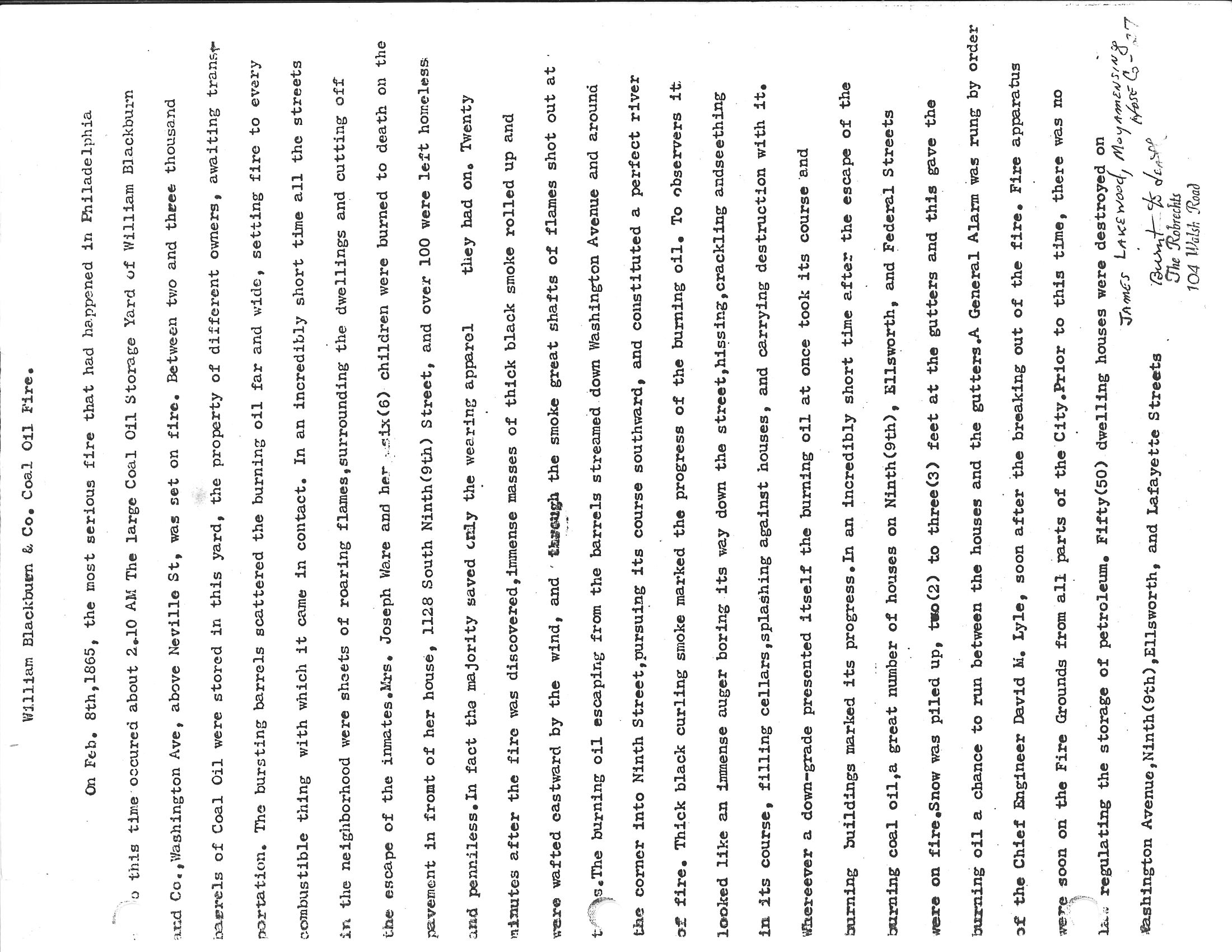
On Wednesday morning February 8, 1865, Police officer Orr was on his beat at Ninth Street and Washington Ave. At half past two o’clock, he was passing the coal oil storage yard of Blackburn & Co. when he saw a flash of fire in one of the storage sheds. He ran to the nearest alarm box and sent in the alarm. By the time the firemen arrived all four sheds and many wooden barrels on the ground were ablaze. The yard contained 1951 wooden barrels of coal oil which amounted to 58,280 gallons. As the barrels were heated by the flames, they burst, spilling their contents making a river of flames.
Many of the men of the Moyamensing Hose Co., which was first to arrive, went from house to house pounding on doors and sometimes kicking them in, in an effort to get the residents out and to safety. Families were running into the cold streets with nothing but their night clothes on. They stood in horror as they watched their homes go up in flames. Some people that took their time leaving found themselves trapped by a wall of flames.
It had snowed the day before which was followed by a strong four-hour rainstorm. This made puddles of slush that carried the river of fire out of the yard and down Washington Ave. When the flames reached Ninth St. it flowed south along Ninth. As it passed Ellsworth, Lafayette and Federal Streets it flowed into these streets on both sides of Ninth, setting the houses on both sides on fire. The flames also spread to the coal yard next to the oil yard, setting the piles of coal on fire. Around three o’clock Chief Engineer Lyle struck a General Alarm which brought every fire company in the city to fight this growing inferno. Most of the efforts of the incoming companies were directed on keeping the burning buildings from spreading. They knew that they could not extinguish the coal oil or the piles of coal. They just tried to contain it.
The immense amount of property loss (over 100 buildings were burned) was overshadowed by the loss of life. The most tragic was the Ware family of 1128 S. Ninth St. Upon being awaken by the firemen, they ran into the street just as the river of oil running in front of their house erupted into a wall of fire. Catching them with no escape. The mother and 7 children perished. 22-year-old Samuel Fleetwood of the Moyamensing Steam Forcing Hose Co. ran into a dwelling on Ninth St. to save an infant, he was trapped by the rapid moving flames and perished in the burning building. After the fire, his charred body was identified by a piece of his fireman’s coat and a latch key. Samuel Fleetwood was single and a veteran of the Civil War, having served with Pennsylvania’s California Regiment.
A committee investigating the sufferings of people caused by the fire, awarded his dependent mother $100 dollars to honor her son’s bravery. There was also an attempt to erect a monument to Fleetwood’s sacrifice. Money was collected and a benefit was held for that purpose on May 13, 1865, at the American Academy of Music, but nothing actually came to fruition.
At the Great Parade of October 16, 1865, honoring the return of the veteran firemen of the Civil War, the Moyamensing Steam Forcing Hose Company carried a banner with the portrait of Samuel Fleetwood to commemorate his sacrifice.
Samuel M. Fleetwood, February 8th, 1865
On Wednesday morning February 8, 1865, Police officer Orr was on his beat at Ninth Street and Washington Ave. At half past two o’clock, he was passing the coal oil storage yard of Blackburn & Co. when he saw a flash of fire in one of the storage sheds. He ran to the nearest alarm box and sent in the alarm. By the time the firemen arrived all four sheds and many wooden barrels on the ground were ablaze. The yard contained 1951 wooden barrels of coal oil which amounted to 58,280 gallons. As the barrels were heated by the flames, they burst, spilling their contents making a river of flames.
Many of the men of the Moyamensing Hose Co., which was first to arrive, went from house to house pounding on doors and sometimes kicking them in, in an effort to get the residents out and to safety. Families were running into the cold streets with nothing but their night clothes on. They stood in horror as they watched their homes go up in flames. Some people that took their time leaving found themselves trapped by a wall of flames.
It had snowed the day before which was followed by a strong four-hour rainstorm. This made puddles of slush that carried the river of fire out of the yard and down Washington Ave. When the flames reached Ninth St. it flowed south along Ninth. As it passed Ellsworth, Lafayette and Federal Streets it flowed into these streets on both sides of Ninth, setting the houses on both sides on fire. The flames also spread to the coal yard next to the oil yard, setting the piles of coal on fire. Around three o’clock Chief Engineer Lyle struck a General Alarm which brought every fire company in the city to fight this growing inferno. Most of the efforts of the incoming companies were directed on keeping the burning buildings from spreading. They knew that they could not extinguish the coal oil or the piles of coal. They just tried to contain it.
The immense amount of property loss (over 100 buildings were burned) was overshadowed by the loss of life. The most tragic was the Ware family of 1128 S. Ninth St. Upon being awaken by the firemen, they ran into the street just as the river of oil running in front of their house erupted into a wall of fire. Catching them with no escape. The mother and 7 children perished. 22-year-old Samuel Fleetwood of the Moyamensing Steam Forcing Hose Co. ran into a dwelling on Ninth St. to save an infant, he was trapped by the rapid moving flames and perished in the burning building. After the fire, his charred body was identified by a piece of his fireman’s coat and a latch key. Samuel Fleetwood was single and a veteran of the Civil War, having served with Pennsylvania’s California Regiment.
A committee investigating the sufferings of people caused by the fire, awarded his dependent mother $100 dollars to honor her son’s bravery. There was also an attempt to erect a monument to Fleetwood’s sacrifice. Money was collected and a benefit was held for that purpose on May 13, 1865, at the American Academy of Music, but nothing actually came to fruition.
At the Great Parade of October 16, 1865, honoring the return of the veteran firemen of the Civil War, the Moyamensing Steam Forcing Hose Company carried a banner with the portrait of Samuel Fleetwood to commemorate his sacrifice.
Career History
Volunteer with the Moyamensing Hose Company