
Richard Owens, July 9th, 1850
Fireman Killed at the Great Fire of July 9, 1850
This was the greatest fire/disaster that Philadelphia had seen to this date
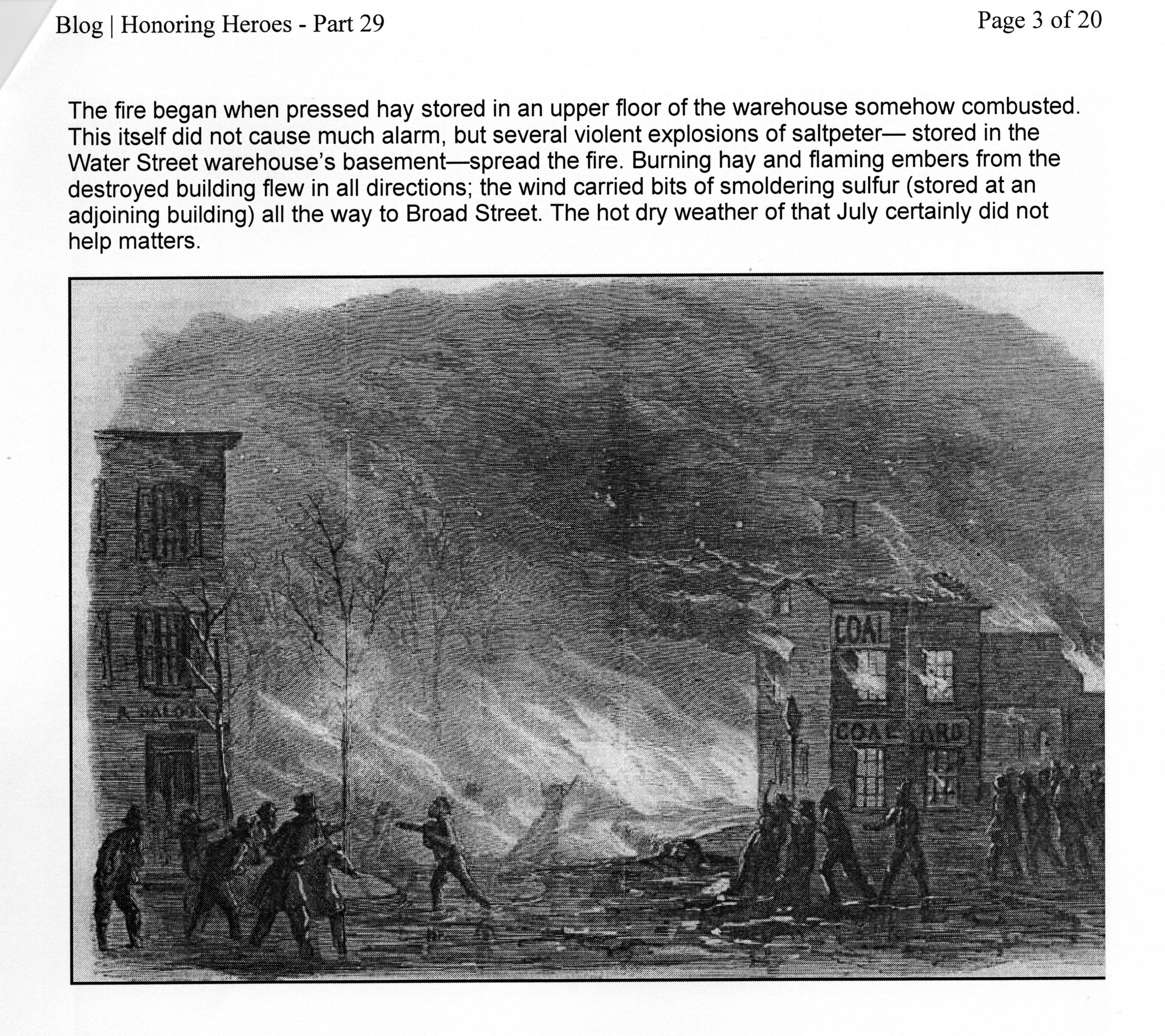
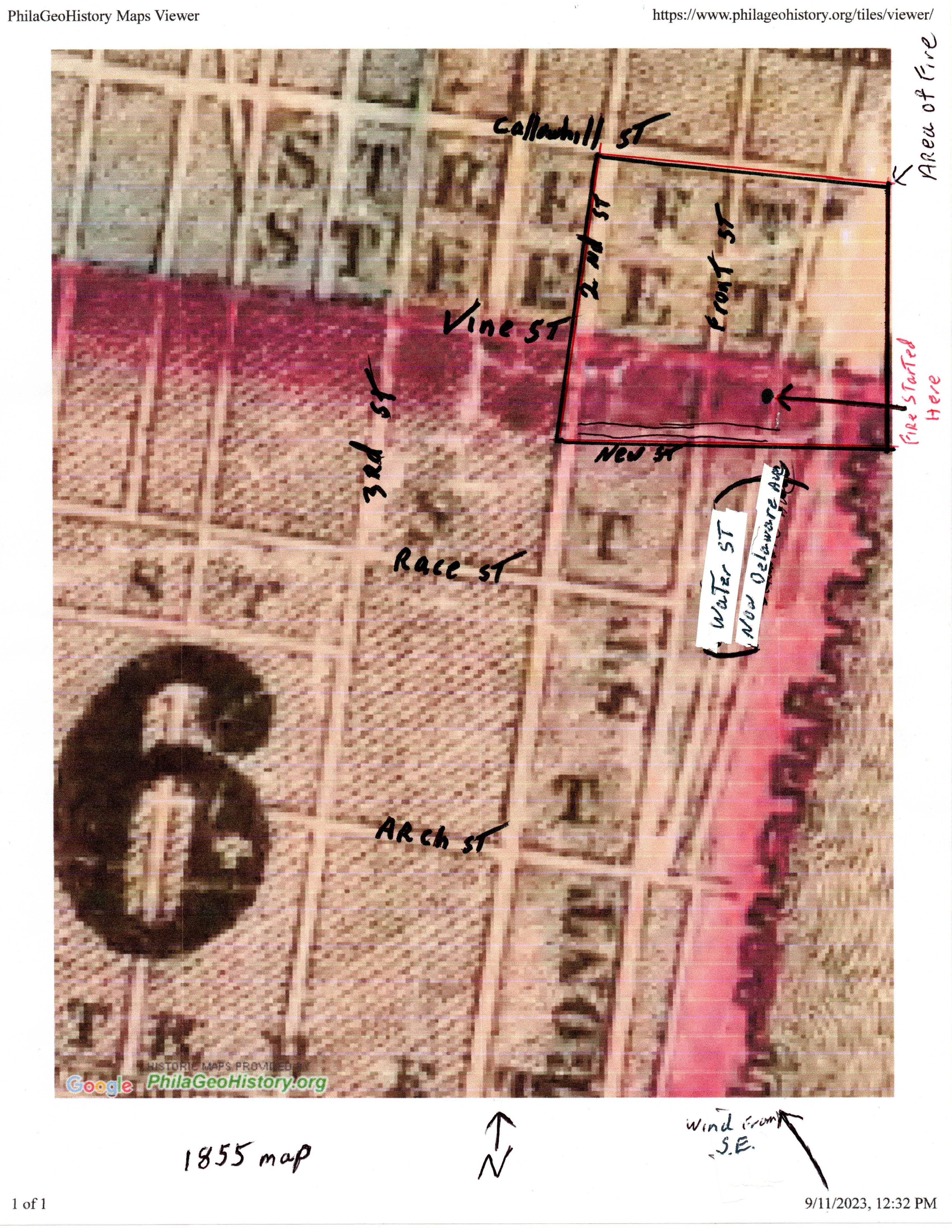
On the afternoon of July 9, 1850, at 4:30 p.m., fire was discovered in the store of Gordon & Berger. This 5-story building was located at 139 Water Street a few doors south of Vine (Water Street is now Delaware Ave. 139 would today be about 237.) The fire started when a hoisting machine was being used to lower barrels of molasses from the 2nd floor to the basement. Sparks from the wheel of the hoist flew into a bail of pressed straw. Soon the bail was ablaze. The fire did not seem bad from the exterior, but it was burning fiercely in the bails of pressed hay contained within. The firemen arrived with the usual zeal. They had water playing on the fire in short order and had the flames partially subdued when a great explosion occurred, injuring and killing many of the fireman and onlookers. It was thought that the explosion was caused by the great quantity of saltpeter (Potassium Nitrate) stored in the basement of the building by its owner Mr. John Black. The explosion not only threw bricks and other building material into the onlookers and fireman, but it threw flaming material into the air which landed on buildings as far as a block away. In all, there were six explosions. There was a strong wind from the Southwest which carried embers and fanned them into rolling fires. Before it could be stopped at 1:00 a.m., the fire covered an area of 18 acres, from the Delaware River to 2nd Street and from New Street on the south to Callowhill Street on the north, and destroyed 367 buildings. At one point a detachment of Marines came from the Navy Yard with explosives, prepared to dynamite buildings to form a fire break. Fortunately, this was not needed. During the conflagration every fire company in the city was fighting this blaze. Four fire companies from Camden NJ, came by ferry to aid in the fight.
The Diligent Engine Company was in service on this day with an old loaned apparatus because their own engine was in pieces at the hall being repaired. The loaner was caught in the explosion and completely destroyed. Fortunately, none of the men were killed, but many were injured. The members of the Diligent Company that could, ran back to their house, assembled their engine, brought it to the fire and went into service. It worked hard for the rest of the night.
Several times during the blaze the heat became so great that the fireman had to play lines on themselves to save their equipment, and the men operating it.
Thomas Stees – Member of the Vigilant Fire Company was struck in the abdomen by a shutter from the store during the explosion. He was taken to the hospital where he died of his injuries the next day, July 10, 1850.
David Mulford – Member of the Northern Liberty Hose Company was killed in Water St. by the third explosion.
Mortimer Morris – Member of the United States Engine Company was killed on Front St. by the explosion.
George McGinnis – Member of the Hibernia Hose Company, drowned when he was thrown into the Delaware River by the blast of the explosion.
Hartman Liechtenhahm – 19 years old member of the Assistance Engine Company, killed by the explosion and buried under the rubble. Listed as missing until July 17.
Richard Owens – Member of the Assistance Engine Company, killed by the explosion and buried under the rubble. Listed as missing until July 17.
Isaac Brown – Member of the Weccacoe Hose Company, killed by the explosion and buried under the rubble. He was listed as missing until July 11.
Unknown Volunteer – Member of an unknown company was killed by the explosion and buried under the rubble. He was so badly disfigured that he remains unidentified to this date.
Mr. Hoffman – Member of Spring Garden Hose Company killed in the explosion.
Alfred C. Carter – 24 year old member of the Phoenix Hose Company killed in the explosion. Buried in the Woodlands Cemetery. A monument was erected on his grave.
Benjamin D. May - Member of the Northern Liberty Hose Company, was struck in the head with a brick that was hurled by the explosion. He was taken to the hospital where he lingered until he succumbed to his injuries on July 16.
Richard Owens, July 9th, 1850
Fireman Killed at the Great Fire of July 9, 1850
This was the greatest fire/disaster that Philadelphia had seen to this date
On the afternoon of July 9, 1850, at 4:30 p.m., fire was discovered in the store of Gordon & Berger. This 5-story building was located at 139 Water Street a few doors south of Vine (Water Street is now Delaware Ave. 139 would today be about 237.) The fire started when a hoisting machine was being used to lower barrels of molasses from the 2nd floor to the basement. Sparks from the wheel of the hoist flew into a bail of pressed straw. Soon the bail was ablaze. The fire did not seem bad from the exterior, but it was burning fiercely in the bails of pressed hay contained within. The firemen arrived with the usual zeal. They had water playing on the fire in short order and had the flames partially subdued when a great explosion occurred, injuring and killing many of the fireman and onlookers. It was thought that the explosion was caused by the great quantity of saltpeter (Potassium Nitrate) stored in the basement of the building by its owner Mr. John Black. The explosion not only threw bricks and other building material into the onlookers and fireman, but it threw flaming material into the air which landed on buildings as far as a block away. In all, there were six explosions. There was a strong wind from the Southwest which carried embers and fanned them into rolling fires. Before it could be stopped at 1:00 a.m., the fire covered an area of 18 acres, from the Delaware River to 2nd Street and from New Street on the south to Callowhill Street on the north, and destroyed 367 buildings. At one point a detachment of Marines came from the Navy Yard with explosives, prepared to dynamite buildings to form a fire break. Fortunately, this was not needed. During the conflagration every fire company in the city was fighting this blaze. Four fire companies from Camden NJ, came by ferry to aid in the fight.
The Diligent Engine Company was in service on this day with an old loaned apparatus because their own engine was in pieces at the hall being repaired. The loaner was caught in the explosion and completely destroyed. Fortunately, none of the men were killed, but many were injured. The members of the Diligent Company that could, ran back to their house, assembled their engine, brought it to the fire and went into service. It worked hard for the rest of the night.
Several times during the blaze the heat became so great that the fireman had to play lines on themselves to save their equipment, and the men operating it.
Thomas Stees – Member of the Vigilant Fire Company was struck in the abdomen by a shutter from the store during the explosion. He was taken to the hospital where he died of his injuries the next day, July 10, 1850.
David Mulford – Member of the Northern Liberty Hose Company was killed in Water St. by the third explosion.
Mortimer Morris – Member of the United States Engine Company was killed on Front St. by the explosion.
George McGinnis – Member of the Hibernia Hose Company, drowned when he was thrown into the Delaware River by the blast of the explosion.
Hartman Liechtenhahm – 19 years old member of the Assistance Engine Company, killed by the explosion and buried under the rubble. Listed as missing until July 17.
Richard Owens – Member of the Assistance Engine Company, killed by the explosion and buried under the rubble. Listed as missing until July 17.
Isaac Brown – Member of the Weccacoe Hose Company, killed by the explosion and buried under the rubble. He was listed as missing until July 11.
Unknown Volunteer – Member of an unknown company was killed by the explosion and buried under the rubble. He was so badly disfigured that he remains unidentified to this date.
Mr. Hoffman – Member of Spring Garden Hose Company killed in the explosion.
Alfred C. Carter – 24 year old member of the Phoenix Hose Company killed in the explosion. Buried in the Woodlands Cemetery. A monument was erected on his grave.
Benjamin D. May - Member of the Northern Liberty Hose Company, was struck in the head with a brick that was hurled by the explosion. He was taken to the hospital where he lingered until he succumbed to his injuries on July 16.
Career History
Volunteer for the Assistance Engine Company