
Charles H. Hines, August 21st, 1847
On the evening of August 21, 1847, a fire broke out in the Sugar House Refinery operated by George L. Broome and Company. This eight-story brick building was located on Bread Street at the corner of Quarry Street (just a block away from the present Fireman’s Hall Museum). It was said to be the largest sugar refinery in the area. This fast-moving fire spread south to a brewery owned by Robert Newland. It soon spread to a row of stables nearby. A short time after midnight, as the fire consumed the huge building, the north wall of the refinery collapsed into Quarry Street.
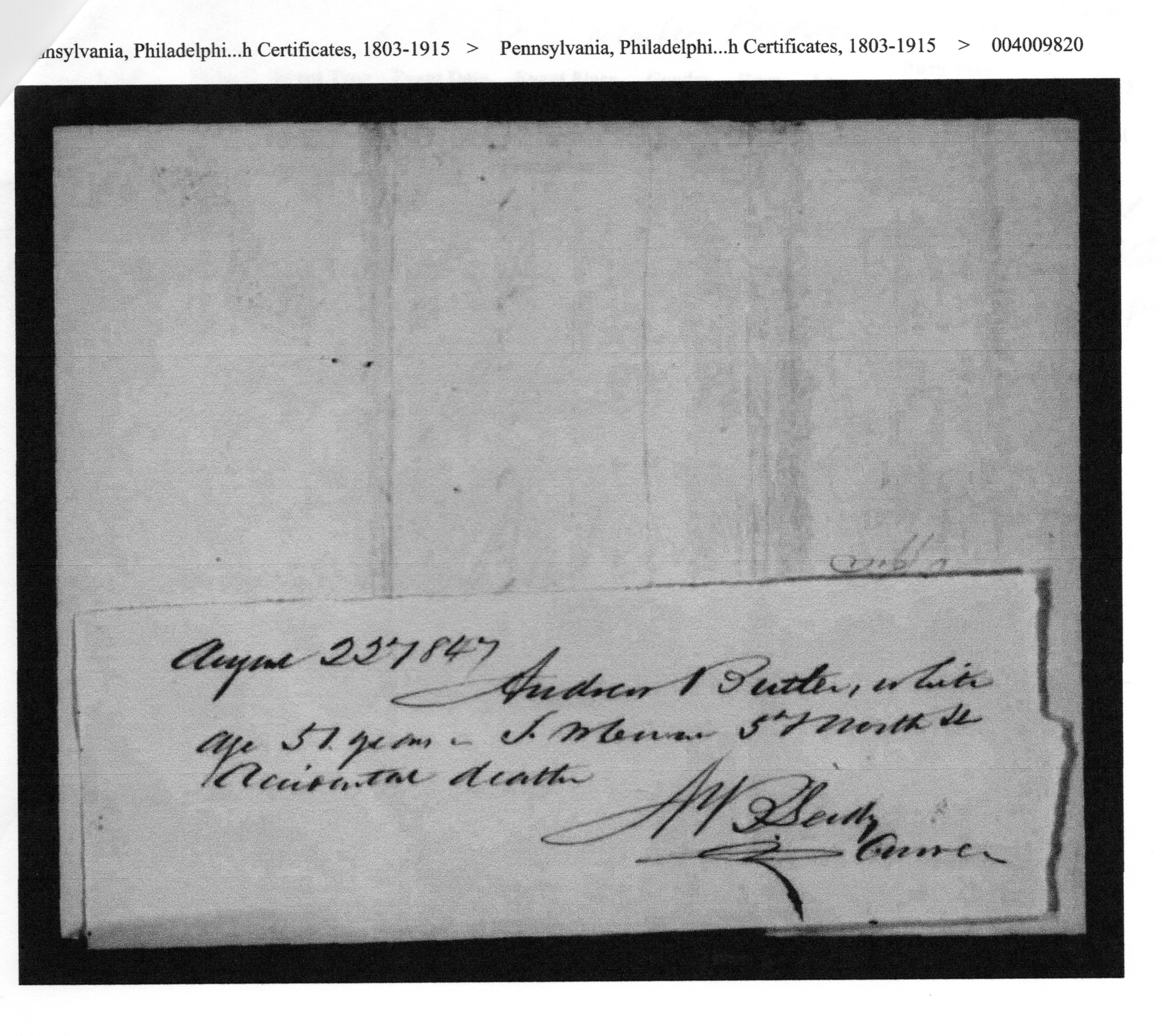
Shortly after the refinery collapse, the wall of the brewery came crashing down into Bread Street, where the Reliance Engine was, burying the men working it. Andrew Butler and Charles Hines both of the Perseverance Hose Company were working the engine and were killed instantly. Many other men were also seriously injured but recovered from their injuries.
There was a report of a third firefighter killed in the collapse. As of this time, we have been unable to find any information confirming this.
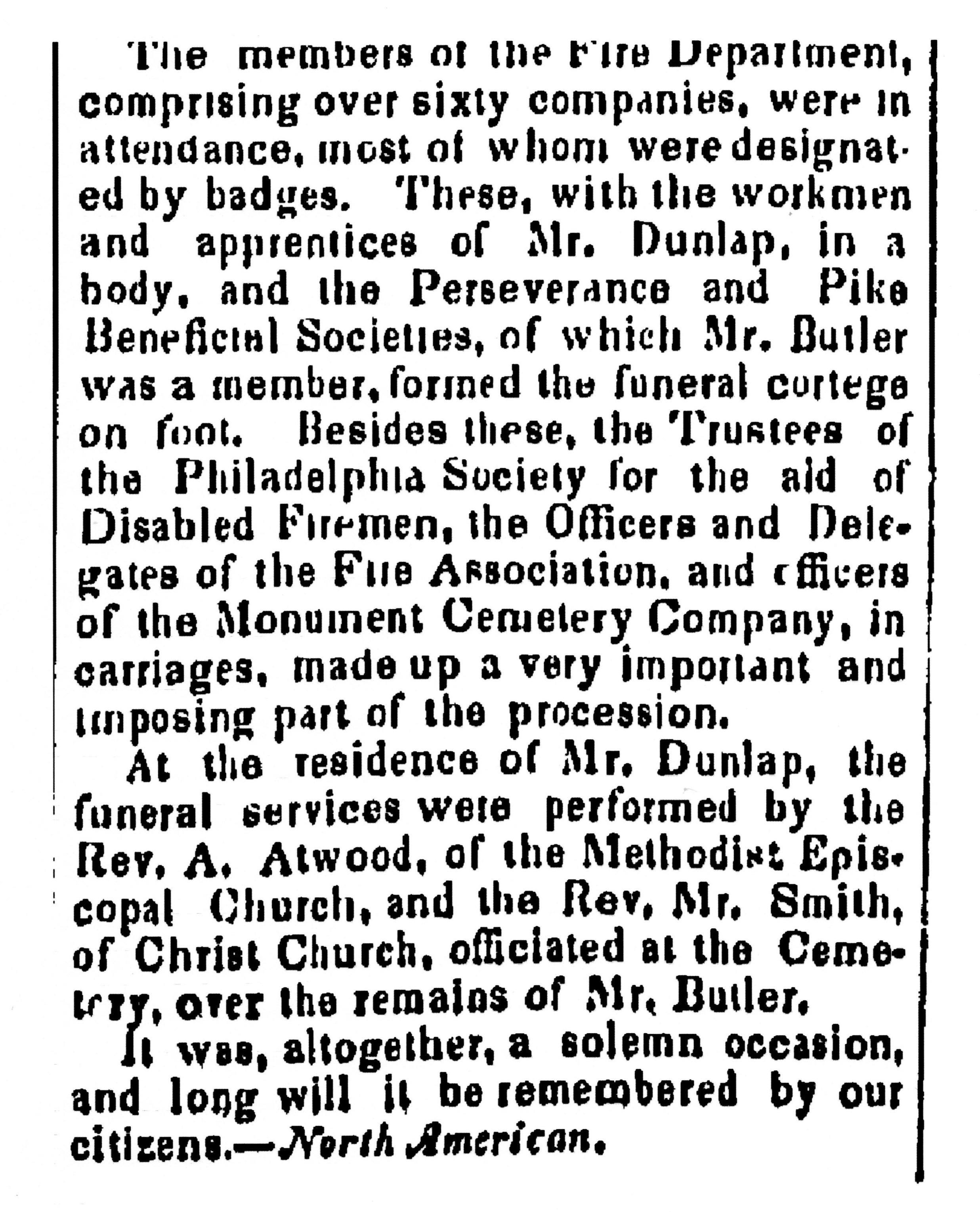
The funerals of the two men was a grand affair. It is said that it was the largest funeral that the city had ever seen. On Tuesday there was a continuous stream of mourners passing the deceased to pay their last respects. At the appointed time Mr. Butler’s casket was placed on the hearse and the procession proceeded to the home of Mr. Dunlap where Mr. Hines was being laid out. At this time the Rev. A. Atwood, of the Methodist Episcopal Church performed a funeral service. The joint procession to Monument Cemetery was led by the two hearses followed by carriages containing the families of the deceased, the representatives of the business community followed by city dignitaries. This was immediately followed by the members of the Perseverance Hose Company, then by the rest of the Fire Department. There were over sixty Fire Companies represented. It is said that the procession stretched for half a mile. At the cemetery the Rev. Mr. Smith of Christ Church officiated.
Charles Hines was laid to rest in the plot of the "Philadelphia Association for the Relief of Disabled Firemen." Andrew Butler was laid to rest in a family plot in the same cemetery.
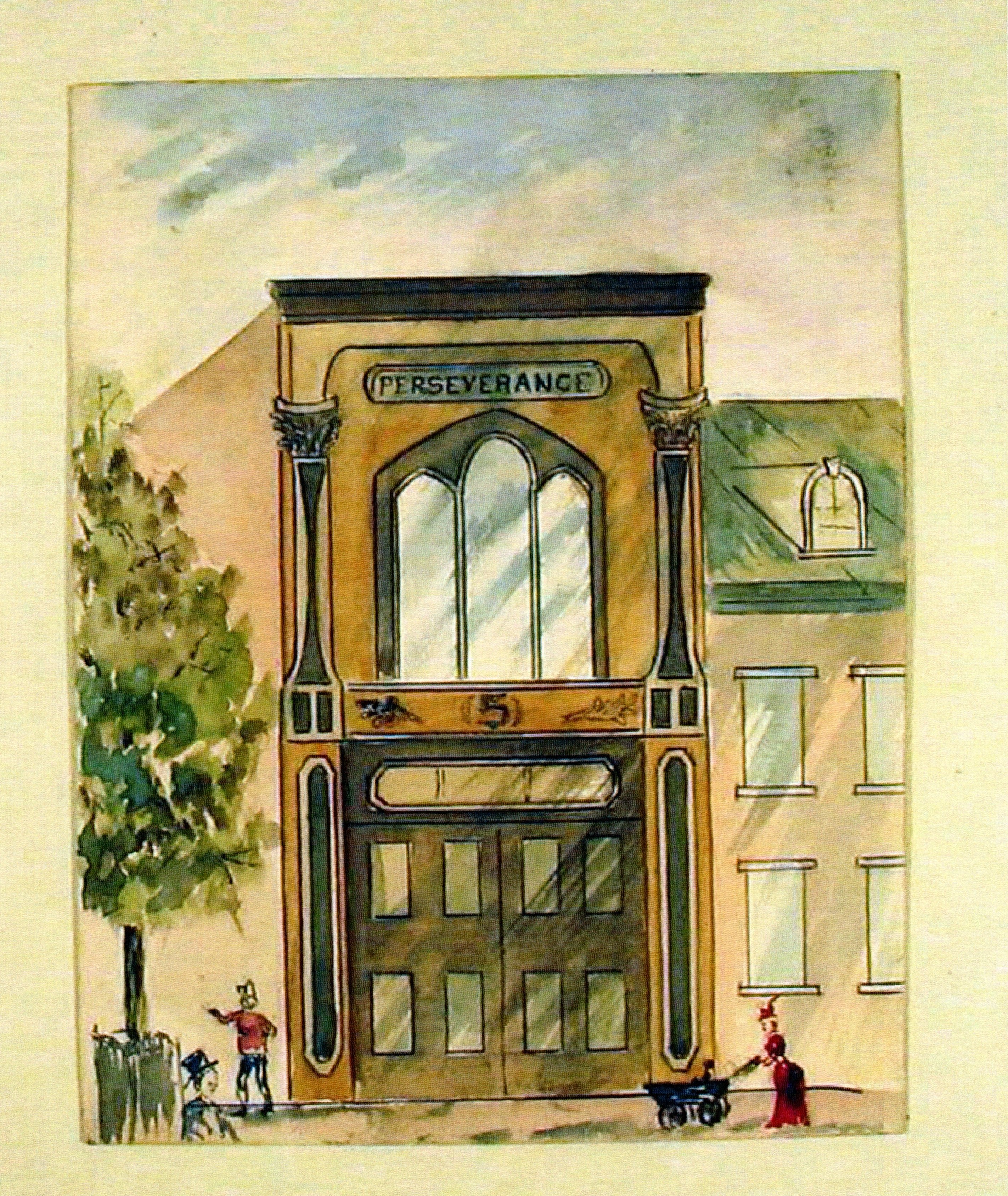
One day a man came into the Museum and told us that he worked at a tannery on Race Street. He said that the building was an old firehouse on the south side of Race St. east of Orianna St. He said that on the front wall of the building at the top was an engraved stone that said “Perseverance.” He remembered inside was a white stone plaque listing Andrew Butler and Charles Hines of the Perseverance and commemorating their death.
The building was at 316 Race St. and was the Firehouse of the Perseverance Hose Company. They occupied that location from about 1860 to 1871 when the paid fire department took it over and Truck "B" was housed there until 1873.
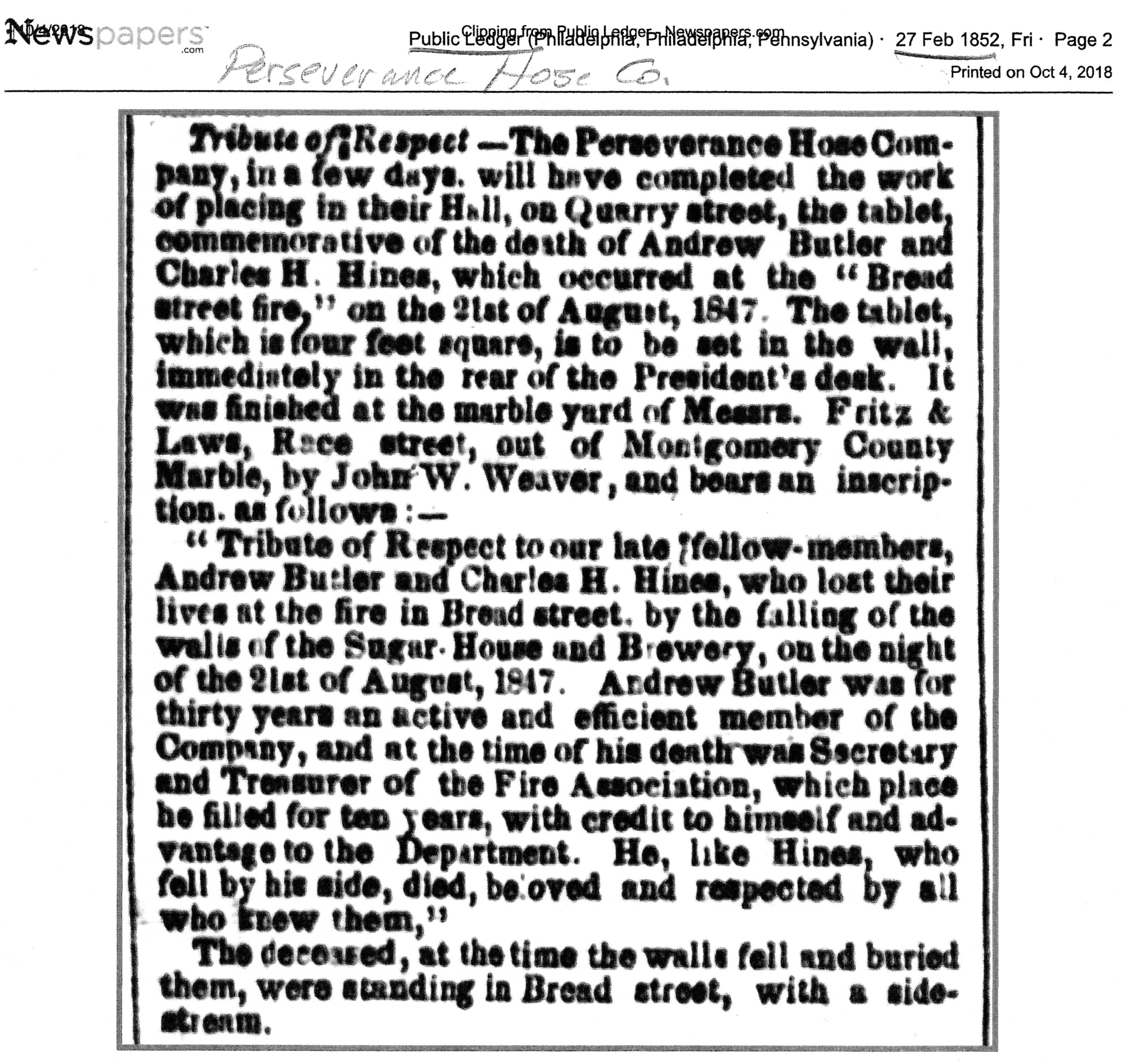
Inside of the firehouse was the marble plaque, mounted in the wall, measuring four feet square. It was in commemoration of their two members who tragically died in the sugar refinery fire of 1846. The plaque read:
“Tribute of Respect to our late fellow members, Andrew Butler and Charles H. Hines, who lost their lives at the fire in Bread Street by the falling of the wall of the Sugar House and Brewery, on the night of 21st of August 1847. Andrew Butler was for thirty years an active and efficient member of the Company, and the time of his death was Secretary and Treasurer of the Fire Association, which place he filled for ten years, with credit to himself and advantage to the Department. He like Hines, who fell by his side, died, beloved and respected by all who know them.”
This plaque was originally placed in their firehouse on Quarry Street (which is still standing, occupied as a residence). When the Perseverance Hose Company moved to 316 Race St., they moved the plaque to the new house. Unfortunately, the old firehouse was torn down in the 1950’s and the plaque was lost.
Charles H. Hines, August 21st, 1847
On the evening of August 21, 1847, a fire broke out in the Sugar House Refinery operated by George L. Broome and Company. This eight-story brick building was located on Bread Street at the corner of Quarry Street (just a block away from the present Fireman’s Hall Museum). It was said to be the largest sugar refinery in the area. This fast-moving fire spread south to a brewery owned by Robert Newland. It soon spread to a row of stables nearby. A short time after midnight, as the fire consumed the huge building, the north wall of the refinery collapsed into Quarry Street.
Shortly after the refinery collapse, the wall of the brewery came crashing down into Bread Street, where the Reliance Engine was, burying the men working it. Andrew Butler and Charles Hines both of the Perseverance Hose Company were working the engine and were killed instantly. Many other men were also seriously injured but recovered from their injuries.
There was a report of a third firefighter killed in the collapse. As of this time, we have been unable to find any information confirming this.
The funerals of the two men was a grand affair. It is said that it was the largest funeral that the city had ever seen. On Tuesday there was a continuous stream of mourners passing the deceased to pay their last respects. At the appointed time Mr. Butler’s casket was placed on the hearse and the procession proceeded to the home of Mr. Dunlap where Mr. Hines was being laid out. At this time the Rev. A. Atwood, of the Methodist Episcopal Church performed a funeral service. The joint procession to Monument Cemetery was led by the two hearses followed by carriages containing the families of the deceased, the representatives of the business community followed by city dignitaries. This was immediately followed by the members of the Perseverance Hose Company, then by the rest of the Fire Department. There were over sixty Fire Companies represented. It is said that the procession stretched for half a mile. At the cemetery the Rev. Mr. Smith of Christ Church officiated.
Charles Hines was laid to rest in the plot of the "Philadelphia Association for the Relief of Disabled Firemen." Andrew Butler was laid to rest in a family plot in the same cemetery.
One day a man came into the Museum and told us that he worked at a tannery on Race Street. He said that the building was an old firehouse on the south side of Race St. east of Orianna St. He said that on the front wall of the building at the top was an engraved stone that said “Perseverance.” He remembered inside was a white stone plaque listing Andrew Butler and Charles Hines of the Perseverance and commemorating their death.
The building was at 316 Race St. and was the Firehouse of the Perseverance Hose Company. They occupied that location from about 1860 to 1871 when the paid fire department took it over and Truck "B" was housed there until 1873.
Inside of the firehouse was the marble plaque, mounted in the wall, measuring four feet square. It was in commemoration of their two members who tragically died in the sugar refinery fire of 1846. The plaque read:
“Tribute of Respect to our late fellow members, Andrew Butler and Charles H. Hines, who lost their lives at the fire in Bread Street by the falling of the wall of the Sugar House and Brewery, on the night of 21st of August 1847. Andrew Butler was for thirty years an active and efficient member of the Company, and the time of his death was Secretary and Treasurer of the Fire Association, which place he filled for ten years, with credit to himself and advantage to the Department. He like Hines, who fell by his side, died, beloved and respected by all who know them.”
This plaque was originally placed in their firehouse on Quarry Street (which is still standing, occupied as a residence). When the Perseverance Hose Company moved to 316 Race St., they moved the plaque to the new house. Unfortunately, the old firehouse was torn down in the 1950’s and the plaque was lost.
Career History
Volunteer with the Perseverance Hose Company